Solar Panel FAQs
If you are researching solar panels, you will likely have questions about cost, performance, installation, and whether solar panels are suitable for your property.
Below are some of the most common questions our customers ask when considering a solar panel installation. Where relevant, we have included links to guides that explain certain topics in more detail.
Contact us today for a free, no-obligation consultation and quote!


Fully Certified Renewable Installer
Providing confidence in home-grown energy
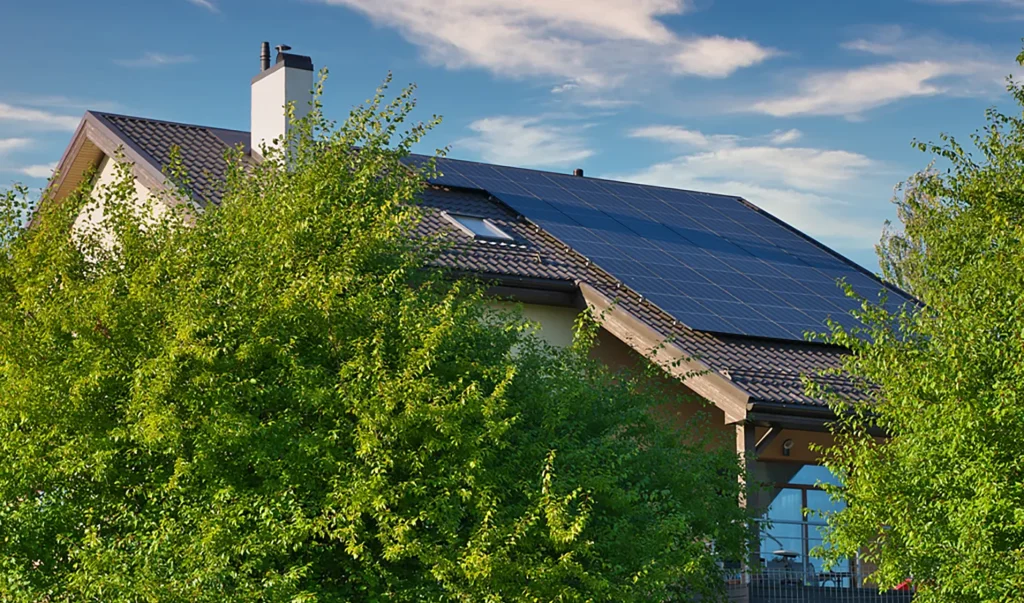
Are Solar Panels Suitable for My Property?
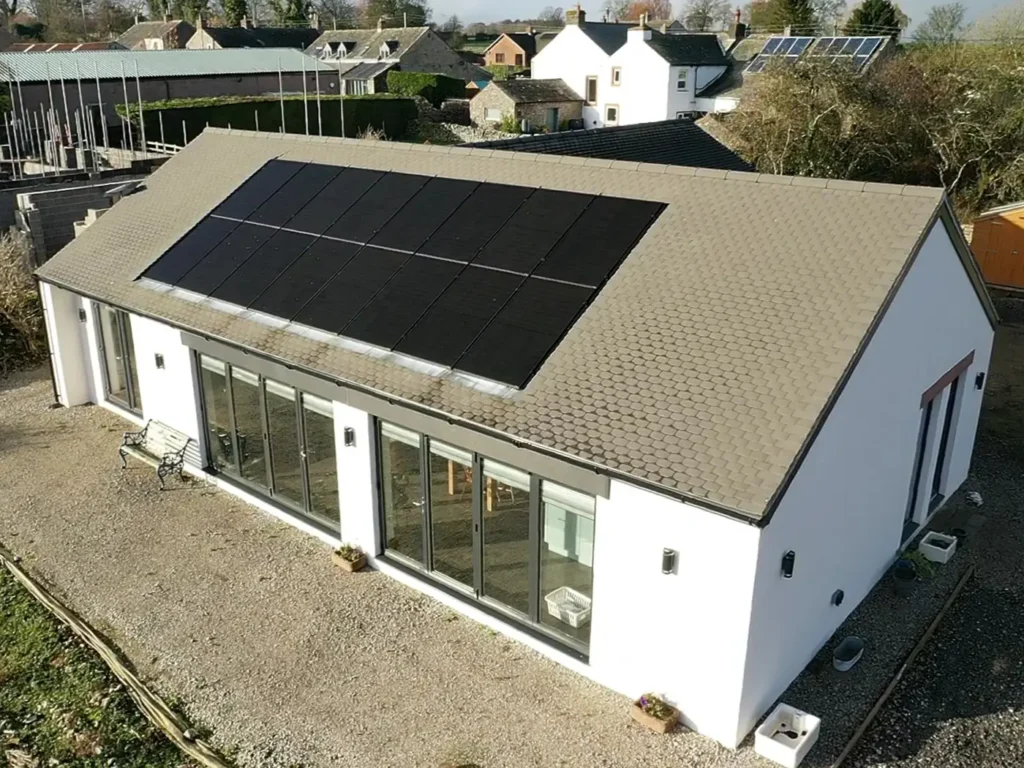
Many people first want to know whether solar panels will work on their property. Suitability usually depends on roof orientation, available space, and the property’s typical electricity usage.
Solar panels can be installed on many different types of property. The most important factors are available roof space, roof orientation, and the amount of sunlight the roof receives during the day.
A survey allows the roof structure and layout to be assessed so a suitable system can be designed.
Yes. Solar panels generate electricity from daylight rather than direct sunlight, so they can work effectively even on cloudy days.
Although output is higher on sunny days, solar panels can still generate electricity throughout the year in the UK.
Yes. Solar panels can still generate electricity even when it is cloudy, as they rely on daylight rather than direct sunlight.
Generation will usually be lower than on a clear sunny day, but the system can still produce electricity.
Solar panels typically generate less electricity during the winter months because days are shorter and sunlight levels are lower.
However, they still generate electricity year-round.
South-facing roofs often produce the highest output, but solar panels can still work well on east- and west-facing roofs.
The overall system design depends on the roof orientation and available space.
Yes. Solar panels can be installed on flat roofs using mounting systems that tilt the panels to capture sunlight effectively.
This approach is commonly used on commercial buildings and some residential properties.
The number of panels depends on the available roof space and the size of the panels being installed.
During a survey, the roof area can be measured to design the system to make the best use of the available space.
Common Concerns About Solar Panels
When researching solar panels, homeowners often have concerns about reliability, maintenance, and how the system will work in practice.
When installed correctly, solar panels should not damage the roof. Mounting systems are designed to attach securely to the roof structure while maintaining the roof’s weather protection.
A survey helps ensure the roof is suitable for installation.
No. Solar panels themselves do not produce any noise while generating electricity.
The system includes an inverter that converts electricity for use in the property, but these are typically very quiet.
If the system generates more electricity than the property uses, the excess can be exported to the National Grid.
Through the Smart Export Guarantee, energy suppliers may pay for exported electricity.
Most standard solar systems automatically switch off during a power cut for safety reasons.
However, systems that include battery storage may provide limited backup power depending on the system design.
Solar panels generally require very little maintenance. They have no moving parts and are designed to operate for many years.
Occasional inspections or cleaning may help maintain performance.
Solar systems are usually designed so that a fault with one panel does not stop the rest of the system from working.
Monitoring systems can also help identify issues if they occur.
Solar panels are designed to last for many years. Most manufacturers provide long performance warranties, and systems often continue generating electricity well beyond this period.
Costs and Savings
Cost and potential savings are usually key factors when deciding whether to install solar panels.
The cost of a solar panel system depends on the system size, the property, and whether battery storage is included.
You can learn more in our guide to solar panel costs and energy savings.
Solar panels can reduce the amount of electricity you need to import from the grid by generating electricity on-site.
The level of savings depends on the system size, the property’s electricity usage, and the amount of solar energy used directly.
The payback period depends on the installation cost, energy usage, electricity prices, and any income received through export payments.
Many systems provide long-term savings over the lifetime of the installation.
The main support scheme currently available for solar electricity generation in the UK is the Smart Export Guarantee (SEG).
This allows households to receive payments for excess electricity exported to the grid.
The Smart Export Guarantee allows energy suppliers to pay households for electricity exported from their solar system to the National Grid.
Rates vary depending on the energy supplier and the tariff selected.
Solar Battery Storage

Many solar installations now include battery storage. A battery allows electricity generated during the day to be stored and used later.
A solar battery stores electricity generated by the solar panels so it can be used later in the day, such as in the evening when the panels are no longer producing power.
A battery is not required, but many homeowners choose to install one because it allows them to use more of the electricity their system generates.
Without a battery, excess electricity is usually exported to the grid.
A battery can increase the amount of solar electricity used within the property rather than exporting it to the grid.
This can improve the overall efficiency of the solar system.
The cost of a solar battery depends on the storage capacity and system design.
Battery systems are usually discussed during the system design stage when planning a solar installation.
Battery lifespan depends on the technology used and how frequently the battery is charged and discharged.
Most battery systems are designed to last for many years of regular use.
Some battery systems can provide backup power during a power cut, though this depends on the system design and installed equipment.
This can be discussed during system planning.
Solar Panel Installation
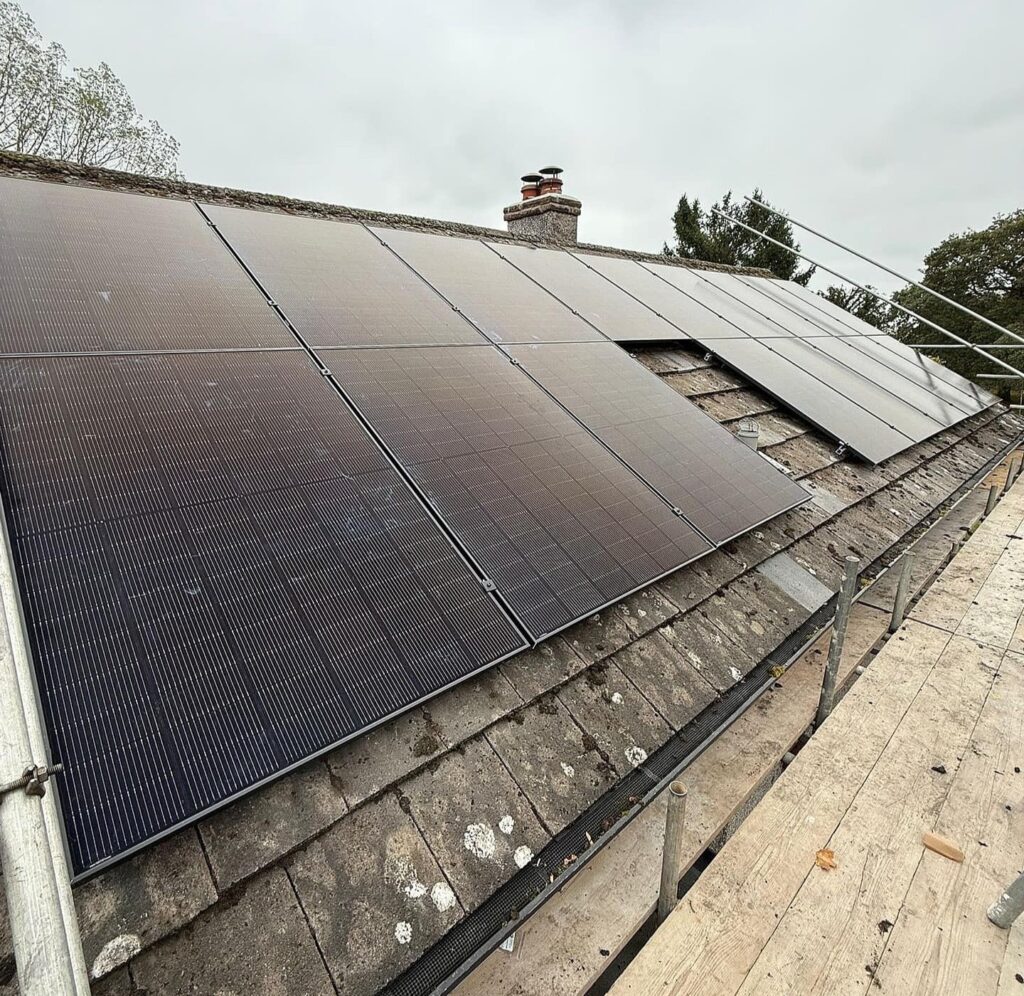
Understanding the installation process helps homeowners know what to expect before work begins.
The process usually begins with an initial discussion about the property and energy usage. If the project moves forward, a survey will allow the roof and electrical system to be assessed.
You can read more about what to expect during a solar panel installation.
Most residential solar installations can be completed within one or two days, depending on the size of the system.
Larger systems or installations that include battery storage may take slightly longer.
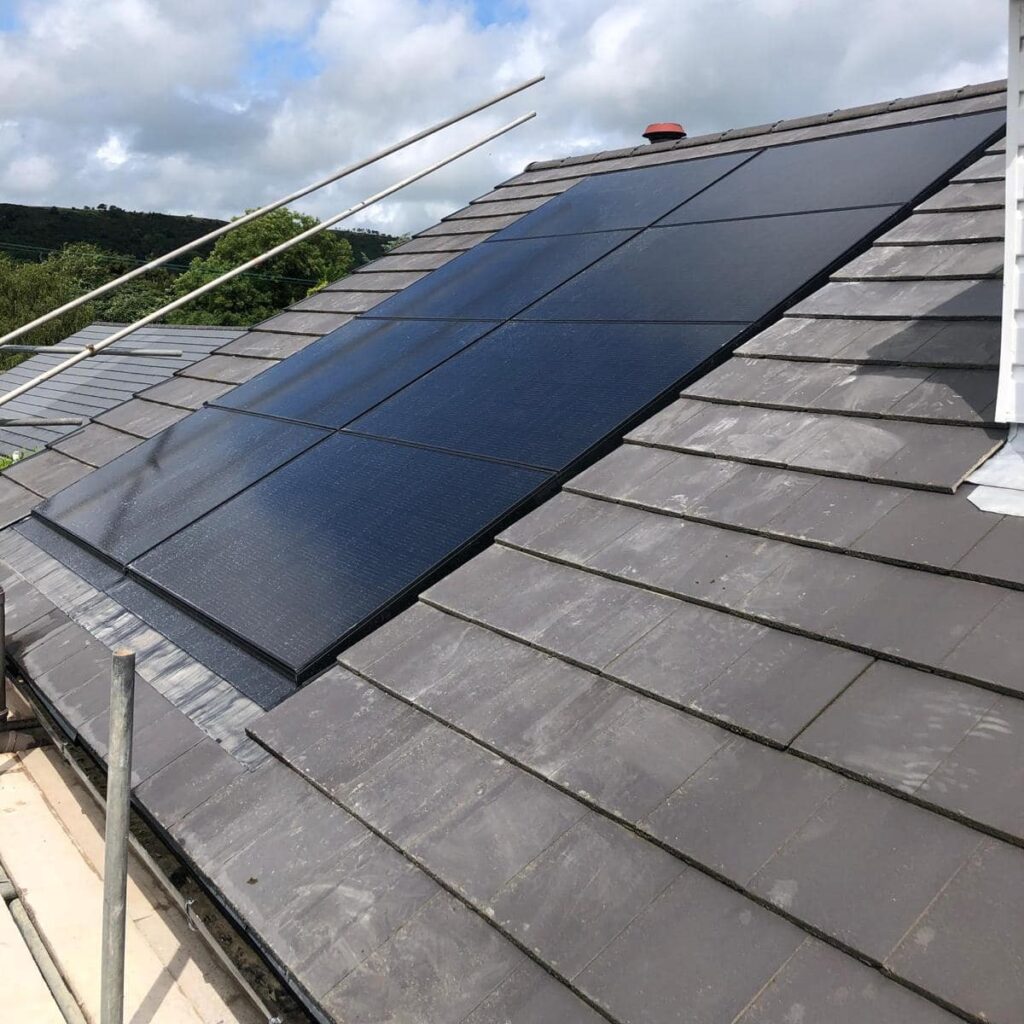
Scaffolding is often used during installation to allow safe access to the roof.
This is usually removed shortly after installation is complete.
Most residential solar installations fall under permitted development, although this depends on the property and its location.
Planning considerations can usually be discussed during the early stages of the project.
The inverter is usually installed inside the property, often in a utility room, garage, or loft.
Its location depends on the system design and available space.
A solar battery is usually installed inside the property, often in a garage, utility room, or another suitable location.
The exact position depends on the system design and available space.
Benefits of Solar Panels
Many homeowners install solar panels when looking to reduce electricity costs or generate renewable energy at home.
Solar panels enable properties to generate their own electricity, reducing reliance on grid-supplied electricity.
Some homeowners consider solar panels to be an attractive feature because they can reduce electricity bills and improve energy efficiency.
Solar panels generate electricity from renewable energy, helping reduce reliance on fossil fuels.
Yes. Solar panels can be used alongside heat pumps or electric vehicle chargers to help power these systems with renewable electricity.
Working With Greenfields
If you are considering a solar installation, the first step is usually understanding the property and energy requirements.
The process normally begins with a discussion about the property and electricity usage.
A survey allows the roof, electrical system, and available space to be assessed, enabling the system to be designed correctly.
We usually begin with an initial conversation about the property and energy usage. Based on this information, we can often provide an indication of possible system options.
A survey then allows a formal quotation and system design to be prepared.
Typical information includes roof orientation, available roof space, electricity usage, and whether battery storage is available.
Yes. You can explore our solar installation case studies to see examples of systems installed for various property types.
Learn More About Solar Installations
If you are researching solar installations, you may also find these guides helpful:
These resources explain the costs, funding options, and real-world examples of solar systems installed in various property types.
What our clients say
Our reputation is built on word-of-mouth recommendations from satisfied customers. See why Greenfields is trusted for high-quality installations and exceptional service.
Contact us
Contact us today for a free consultation and quote, and let our experts design a system that meets your needs.