
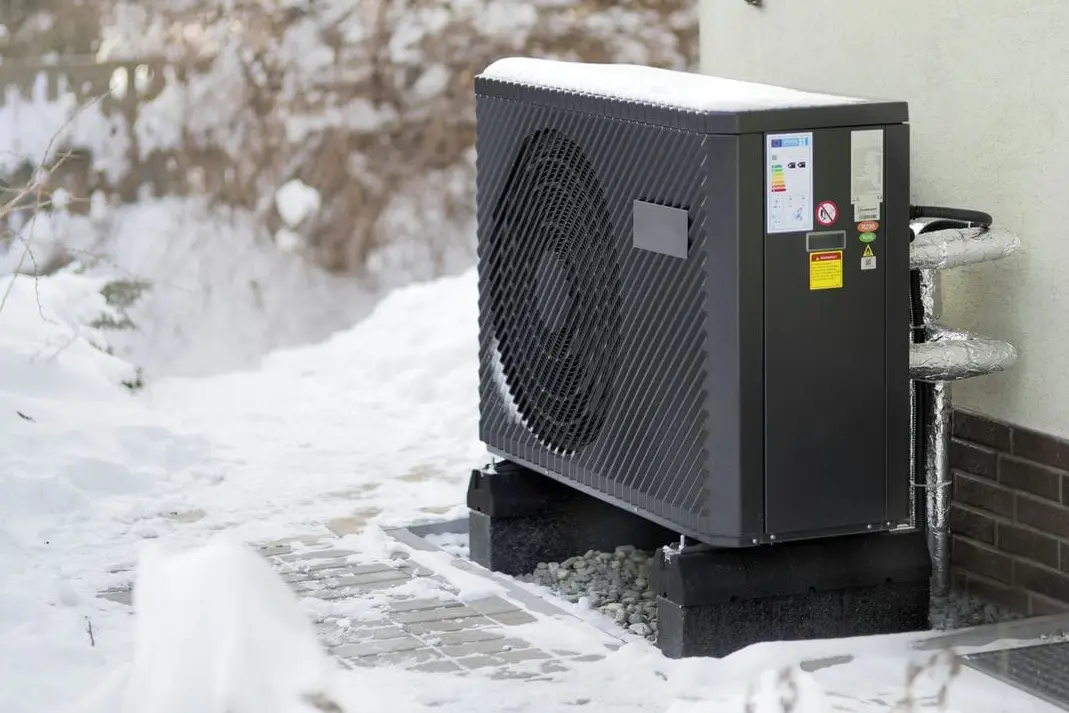
One of the most common questions our customers ask when researching heat pumps is whether they can provide reliable heating during colder weather.
The short answer is yes. Modern heat pumps are designed to operate across a wide range of outdoor temperatures and can continue providing heating even during cold winter conditions.
Understanding how heat pumps work in winter helps explain why they are now widely used in both residential and commercial buildings.
How Heat Pumps Provide Heat in Cold Weather
Unlike traditional boilers, which generate heat by burning fuel, heat pumps transfer heat from the surrounding environment into a building.
Even when outdoor temperatures are low, the air, ground, or nearby water still contains thermal energy. Heat pumps capture this energy and concentrate it using a refrigeration cycle before transferring it into the building’s heating system.
Depending on the system type, heat can be taken from:
- the outside air
- the ground beneath the property
- nearby water sources such as lakes or aquifers
Because heat pumps move heat rather than generate it directly, they can produce multiple units of heat for every unit of electricity used, making them an efficient heating solution when properly designed.
Air Source Heat Pumps in Winter
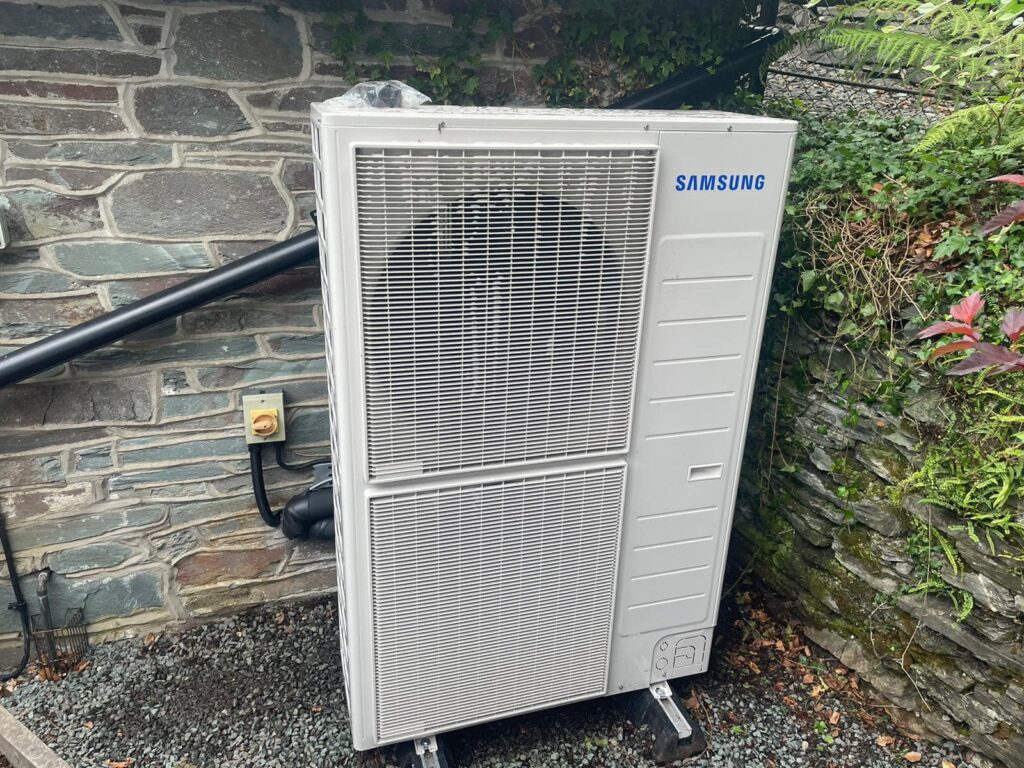
Air-source heat pumps extract heat from the outside air and transfer it to the property’s heating system.
Modern units are designed to operate efficiently even when temperatures fall below freezing. Although efficiency can be slightly reduced during very cold periods, a correctly sized system will continue to provide reliable heating.
Many of the air-source heat pump installations we carry out across Cumbria operate successfully throughout winter, particularly when the system has been designed around the property’s heating demand and insulation levels.
Modern systems include features to help maintain performance in colder conditions:
- automatic defrost cycles
- variable-speed compressors
- advanced system controls
Ground Source Heat Pumps in Winter
Ground source heat pumps extract heat from buried pipes, either through horizontal ground loops or vertical boreholes.
Because temperatures below the surface remain relatively stable throughout the year, ground source systems can provide very consistent heating performance during winter.
For larger buildings or properties with available land, ground-source heat pumps are often used for their long-term efficiency and stable operation.
We have installed ground-source systems for a range of projects, including commercial buildings and visitor centres, where year-round, consistent heating is particularly important.
Water Source Heat Pumps in Winter
Water-source heat pumps extract heat from nearby bodies of water, such as lakes, rivers, or underground aquifers.
Like ground temperatures, water temperatures tend to remain more stable than outdoor air temperatures, allowing water-source systems to operate very efficiently during winter.
For example, at Brockhole Visitor Centre on Lake Windermere, we installed a ground-source heat pump system with a lake collector array beneath the pier. The system extracts renewable heat from the lake to provide year-round, efficient heating for the visitor centre.
Projects like this demonstrate how heat pump technology can be adapted to suit the specific conditions of each site.
Designing a Heat Pump System That Works in Winter
One of the most important factors in heat pump performance is system design.
Every building has different heating requirements, so a heat pump system needs to be carefully sized and configured to match the property.
When we assess a property for a heat pump installation, we typically gather information such as:
- the heat demand of the building
- insulation levels and heat loss
- radiator or underfloor heating systems
- available outdoor space for equipment
- the customer’s heating and hot water usage
This information allows the system to be designed to comfortably meet the building’s heating requirements throughout the year, including during colder winter periods.
A properly designed system is key to ensuring that the heat pump operates efficiently and provides reliable heating.
Do Heat Pumps Need a Backup System?
In most domestic properties, a properly designed heat pump system is capable of meeting the building’s heating and hot water demand on its own throughout the year.
Some systems include a supplementary heat source, but these are typically used in specific situations such as:
- very large buildings with high heating demand
- commercial facilities where backup capacity is required
- installations designed with additional redundancy
Examples of supplementary heat sources may include:
- An electric immersion heater within the hot water cylinder
- A backup boiler in larger buildings
- Additional heating systems in commercial facilities
In many homes, these backup systems are rarely used, as the heat pump is designed to provide the required heating capacity independently.
Heat Pumps in Colder Climates
Heat pumps are widely used in countries with colder winters than the UK, including parts of Scandinavia and North America. Advances in technology have allowed modern systems to operate effectively across a wide range of climates, making them suitable for many different types of properties. As with any heating system, performance ultimately depends on correct system design and installation.
Learn More About Heat Pump Installations
If you are researching heat pumps, you may also find these resources useful:
These guides explain the installation process and show examples of heat pump systems installed in various property types.