Heat Pump vs Gas or Oil Boiler: Which Is Right for Your Property?
When upgrading or replacing a heating system, one of the most common questions our customers ask is whether a heat pump or a traditional boiler is the better option for their property.
Both options can provide reliable heating and hot water, but the right solution often depends on the building itself.
Greenfields installs both heat pump systems and traditional gas and oil boilers, and we have experience working with a wide range of property types across Cumbria and the UK. These include modern homes, older rural properties, and commercial buildings.
Because every property is different, our approach is always to understand the building and the customer’s requirements before recommending the most suitable heating system.
Contact us today for a free, no-obligation consultation and quote!

Government Grants for Heat Pumps
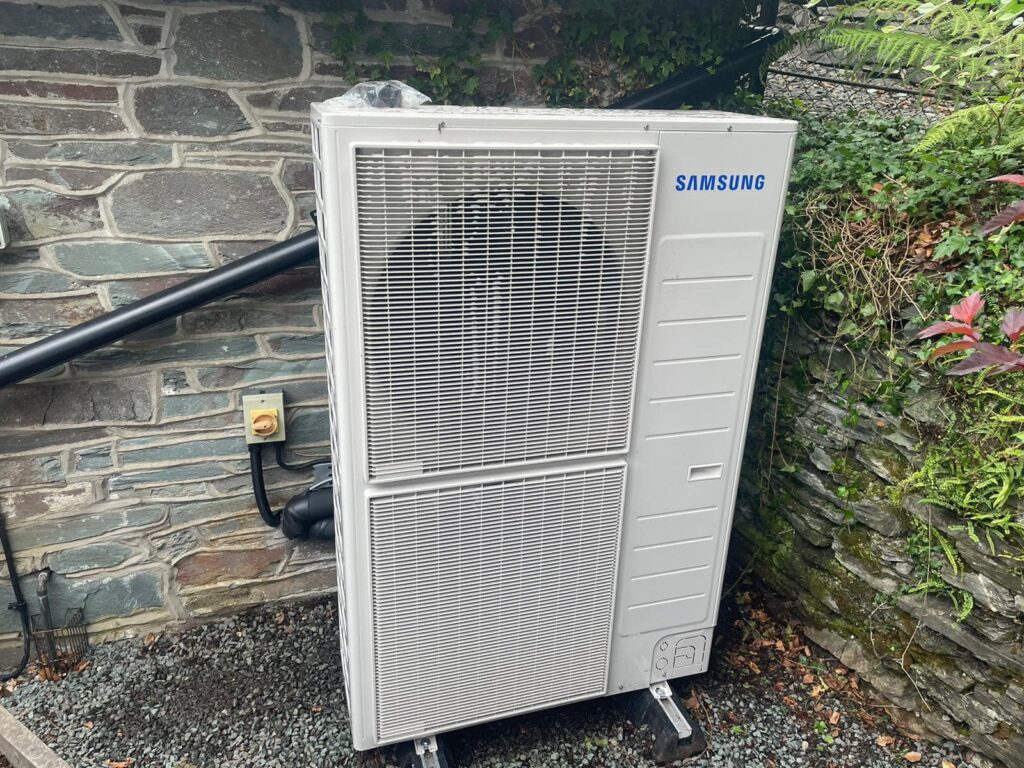
In the UK, many homeowners installing a heat pump may be eligible for support through the Boiler Upgrade Scheme (BUS). This can significantly alter the financial proposition of installing a heat pump as a replacement for a traditional boiler.
This government scheme currently provides a grant towards the cost of installing certain types of heat pump systems. For many households, this support can significantly reduce the upfront cost of installation.
Because grant availability and eligibility rules can change over time, it is important to review the latest information when considering a heat pump installation.
We explain the current schemes and how they work in more detail in our guide to heat pump grants and funding options.
When discussing heating upgrades with customers, this is often one of the first topics we review to understand the overall project.
Choosing the Right Heating System for Your Property
Although comparisons between heat pumps and boilers are common, the most suitable option usually depends on the property and the customer’s aims.
Some of the main factors that influence the decision include:
- Insulation levels and heat loss
- The existing heating system and radiator layout
- The available space for equipment
- The building’s heating and hot water demand
- Whether the property currently uses gas, oil, or LPG heating
In many cases, heat pumps are particularly well-suited to properties where the system can be designed to run efficiently at lower temperatures. This often includes homes with good insulation, or where insulation improvements are possible. They are also commonly a strong option for properties currently using oil or LPG, where running costs can be higher, and a heat pump may offer a more efficient long-term solution.
By contrast, a gas or oil boiler may still be the more practical option in certain situations. For example, in properties with very high heat loss where upgrades are not feasible, or the existing heating system cannot be easily adapted, a boiler can provide a simpler solution. Upfront cost can also be a deciding factor for some homeowners.
Because Greenfields installs both systems, we assess each property individually and recommend the option that best fits the building and the customer’s priorities, rather than promoting a single type of heating system.
Looking at the Whole Heating System
When upgrading a heating system, it’s important to consider more than just the main heat source. The system’s performance depends on how well all components work together.
In practice, this often means looking at elements such as radiator sizing, insulation levels, and system controls alongside the heat source itself. For example, some properties may benefit from:
- Larger or upgraded radiators
- Improved insulation
- Updated heating controls
- A new hot water cylinder
These factors can significantly impact efficiency and overall performance. A well-designed system will deliver more consistent heating, lower running costs, and better long-term results.
For heat pump installations in particular, careful design is essential. Many of the projects featured in our heat pump installation case studies demonstrate how systems are tailored to each property to achieve reliable, efficient performance.
How Greenfields Helps Customers Decide
Choosing between a heat pump and a boiler often starts with a conversation about the property and the existing heating system.
Based on this information, we can often provide an indication of possible options and installation costs.
If a project progresses further, the next step is usually a property survey. During this visit, we gather more detailed information about the building to properly design the system.
This allows us to provide a formal quotation and system recommendation tailored to the property’s needs.
Sometimes the outcome is a heat pump installation. In other cases, a traditional gas or oil boiler may be the more suitable option.
Frequently Asked Questions
In many rural properties, heat pumps can be a strong alternative to oil boilers. Oil systems rely on delivered fuel, which can be more expensive and unpredictable over time. A heat pump uses electricity and can provide more stable running costs, particularly when the system is properly designed. However, suitability depends on the property, so a survey is usually required to confirm the best option.
In many cases, yes. Heat pumps are often installed as a replacement for oil or LPG boilers, especially in off-gas properties. Some properties may require adjustments, such as radiator upgrades or insulation improvements, but many existing heating systems can be adapted. A proper assessment will confirm what changes, if any, are needed.
A boiler may still be the more practical option in certain situations, particularly if the property has very high heat loss or where making changes to the heating system is not feasible. Boilers also tend to have lower upfront costs. For some properties, especially where gas is available, this can make a boiler a simpler short-term solution.
Getting Advice on Your Heating Options
If you are considering upgrading or replacing your heating system and would like advice on whether a heat pump or a traditional boiler may be more suitable for your property, the Greenfields team can help.
We regularly assess homes and commercial buildings across Cumbria and the surrounding areas and can guide you through the options based on your building and heating requirements.
You may also find these guides helpful:
- What to Expect During a Heat Pump Installation
- Heat Pump Costs and Energy Savings
- Heat Pump Grants and Funding Options
- Heat Pump Installation Case Studies
These resources explain the installation process and show examples of heating systems installed in different types of properties.
What our clients say
Our reputation is built on word-of-mouth recommendations from satisfied customers. See why Greenfields is trusted for high-quality installations and exceptional service.
Contact us
Upgrade to a modern, energy-efficient central heating system with Greenfields Heat & Power.
Contact us today to schedule your free consultation and quote, and let our experts design a system that meets your heating needs while maximising energy efficiency.